
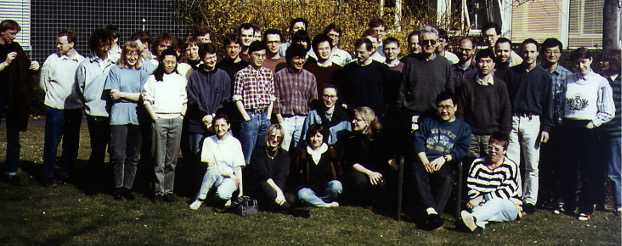
Klaus Rajewsky
Prof. Klaus Rajewsky, a world-famous immunologist and geneticist, is best known for his work in developing conditional knockout mice and using them to explore the role of B cells within the immune system. His work has profound implications for understanding cancer and for improving the efficiency and productivity of medical research worldwide.
Klaus Rajewsky obtained his medical degree at the University of Frankfurt. Following postdoctoral work at the Institut Pasteur in Paris, he established an immunology department at the Institute of Genetics at the University of Cologne in 1964, where he remained for 38 years. From 1996 to 2001, he was the founding programme coordinator of the EMBL Mouse Biology Programme in Monterotondo near Rome. He then worked at Harvard Medical School in Boston for ten years from 2001, and is since 2012 a senior group leader at the Max Delbrück Center for Molecular Medicine in Berlin, Germany.
Klaus Rajewsky won numerous scientific awards and is a member of several learned societies including the National Academy of Sciences of the USA, the American Academy of Arts and Sciences, the German National Academy of Sciences Leopoldina, and the Academia Europea. He holds an honorary doctorate from the University of Cologne Medical School, Charité Universitätsmedizin Berlin, J. W. von Goethe University Frankfurt, and from the University René Descartes, Paris. Many trainees from his laboratory have embarked on distinguished careers in academia and industry all over the world.
Focus of research
Klaus Rajewsky and collaborators developed a general method of targeted mutagenesis in mouse embryonic stem cells by introducing bacteriophage- and yeast-derived recombination systems, opening the way to conditional gene targeting. Using this and other methods in their immunological work, they developed, together with N. A. Mitchison and N. K. Jerne, the antigen-bridge model of T-B cell cooperation, identified germinal centers as the sites of antibody somatic hypermutation, the B cell antigen receptor as a survival determinant of B cells, and germinal centers as major sites of human B cell lymphomagenesis, including Hodgkin lymphoma.
Over the last years the work of his group has focused on mechanisms of microRNA control, targeted mutagenesis and gene repair in hematopoietic cells including mouse and human hematopoietic stem and progenitor cells, differentiation and subset determination in B lymphocytes, and the development of mouse models of human B and T cell pathologies.
